 |
|
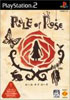
Rule of Rose(PS2) (M) (Adventure) |
|||
Kids Can Be So Cruel
The survival-horror genre has seen a lot of growth since it began, by most accounts, with Resident Evil in 1996. The Silent Hill series contributed heavily by adding psychotraumatic drama as an enrichment to the standard monster game. Scary, thought-provoking games are big these days, prompting developers to explore, much as filmmakers do, the nature of human fear and what it is that really gives us chills.
Monsters are freaking scary. I confess to being kept up late at night in fear of Pyramid Head. Hey, who hasn?t? But think back to what really scared you when you were young. Oftentimes, you were less scared of horror flicks than you were of that one popular girl, or what the school bully might do to you when the recess monitor?s back was turned. Young children are more powerless than a Redfield without a zippo. Remember all those times when telling an adult didn?t really help- or worse, got you in trouble? Some might say that nothing is as scary as a child?s world, nothing so brutal as a group of kids who lack adult morality, with no understanding at all of good from evil. 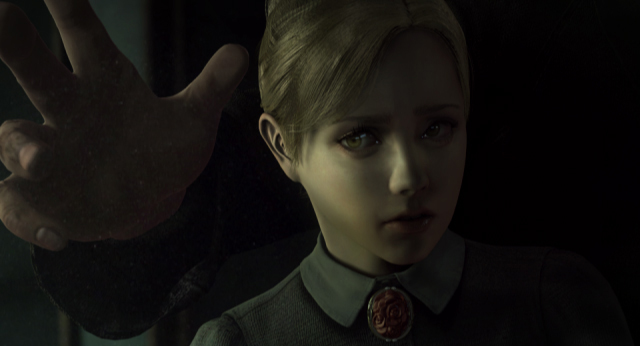 This kind of horror is the basic premise of the fear factor in Punchline?s Rule of Rose. All of the details are seen, with lavish surrealism, through the eyes of a child- a massive flying dirigible becomes a large fish in the sky, adults are enemies, and whispered promises are more sacred than law. Firstly, the game is visually stunning, with lush, intricate environments, beautiful FMV, and a simple white-on-black menu navigation that looks like it was scrawled by a kid with a chalkboard. These details, though, when transposed on the backdrop of blood droplets, dead bugs and fresh-dug graves- and the lovely violin soundtrack which is sometimes frenetic and discordant, sometimes melancholy- turn a child?s charming imagination into an eerie, haunting fleshcrawl. The crayon sketches of a child are cute. The crayon sketches of a child who smiles as he beats an animal to death in a burlap sack? Not so cute. Elements in the game environment strongly suggest that the setting is World War II-era England. You play as Jennifer, a pretty, fragile waif at some point in her teens. The mysterious backstory suggests that Jennifer lost her parents in a zeppelin accident and somehow came to live in a horrid orphanage, where she is promptly relegated to the lowest caste in the brutal system of the Red Crayon Aristocrats, a group of twisted orphans whose power games are usually petty, frequently nasty, and sometimes cross the boundary effortlessly into the grotesque. Jennifer is essentially a prisoner of this abusive social club, and the game?s most ostensible objective consists of attempting, often fruitlessly, to satiate their cruel appetites by providing them with a ?gift? each month, (each in-game chapter). However, it soon becomes clear that the game?s true objective is to unravel the mystery of Jennifer?s traumatic past in hopes of liberating her not only from the wicked orphans, but from herself and the surreal amnesiac state through which the player guides her. One of the best aspects of gameplay is the use of Jennifer?s canine companion, Brown. Brown?s somehow a part of the dark events in Jennifer?s earlier childhood, but as a game device, he can be used via a relatively simple set of controls to track objects by scent, helping to solve most puzzles with (perhaps too much) ease. Besides, when you?re an ostracized child lost in a huge, strange place, there?s something to be said for being able to hug a dog. Those who enjoy horror games for the ?survival? element will be sorely disappointed by this title, however. While most gamers have come to accept the massive, mazelike area where most doors are locked as par for the course in this genre, the fact that there are largely only two play areas to explore (one of them dauntingly enormous) makes it quite tedious at times, especially given that the game?s objectives are often irritatingly simple. The battle system is lugubrious and extremely limited, and with the exception of bosses (featuring, appropriately, the story?s adults), most battles can be avoided entirely. And you?ll want to avoid them, since most often you?ll be attacked seemingly at random by hordes of the same vague-looking imp the entire game, clubbing away ineffectually as they endlessly respawn. Recovery items are over-plentiful, although they?re setting-appropriate and cute- items like biscuits, candies and minced pies. 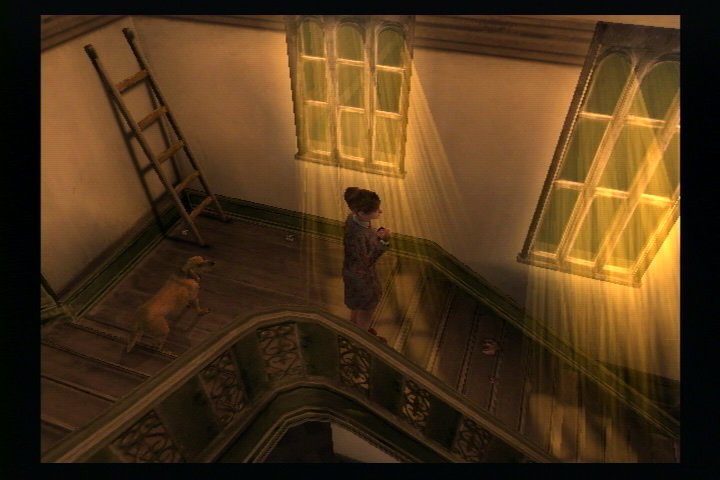 Still, the story stands on its own nicely as an old-fashioned adventure game, and the psychological horror, beautiful environment and characters, and attention to creepy details- including a ?noir filter? that can add old-school graininess to the display- make it well worth playing for the more patient, cerebral gamer. The impetus to keep playing comes from the curiosity about what really happened among the orphans, and a sort of morbid fascination with what gory visuals the next chilling revelation might bring. It should be said that the game is more than a little sexually suggestive at times, and given that the major characters are all minors, it might give pause to some. If the American consumer were really all that offended by young girls of nonspecific ages in short skirts, there would hardly be any market for Japanese entertainment media here. But the often horrific story elements can make certain aspects- adolescents preoccupied with bondage games, limbs tangling in quiet conspiracy over a dark crayon colorscape- more than a little uncomfortable to watch. So much so, in fact, that Sony initially refused to port it to the US. If not for publisher Atlus, we wouldn?t have seen an American release at all. Director Shuji Ishikawa placed a high degree of faith in the maturity of his audience, however. In an interview with GamaSutra earlier this year, Ishikawa said, ?If we look at it through the eyes of adults, when girls play with each other in this way it may be considered somewhat erotic, but with kids, I really don?t think they?d see it that way. It?s more genuine, not lustful.? Indeed, this follows the major game theme of the rules and values in a child?s world being completely different from an adult?s. The game?s last chapter, the orphanage bathed in a wan sunlight, seems to suggest that even the kids? gruesome games may even be, in their eyes, simply fun, and not evil. ?These are things kids actually do, but we don?t want to see,? Ishikawa added in that interview. Rule of Rose can be a real shock to the conscience, whether you were the grade school kid who made others eat dirt, or whether you were the one eating it yourself. And after playing this game, you?ll be pretty glad that?s all you had to do.
|
|||